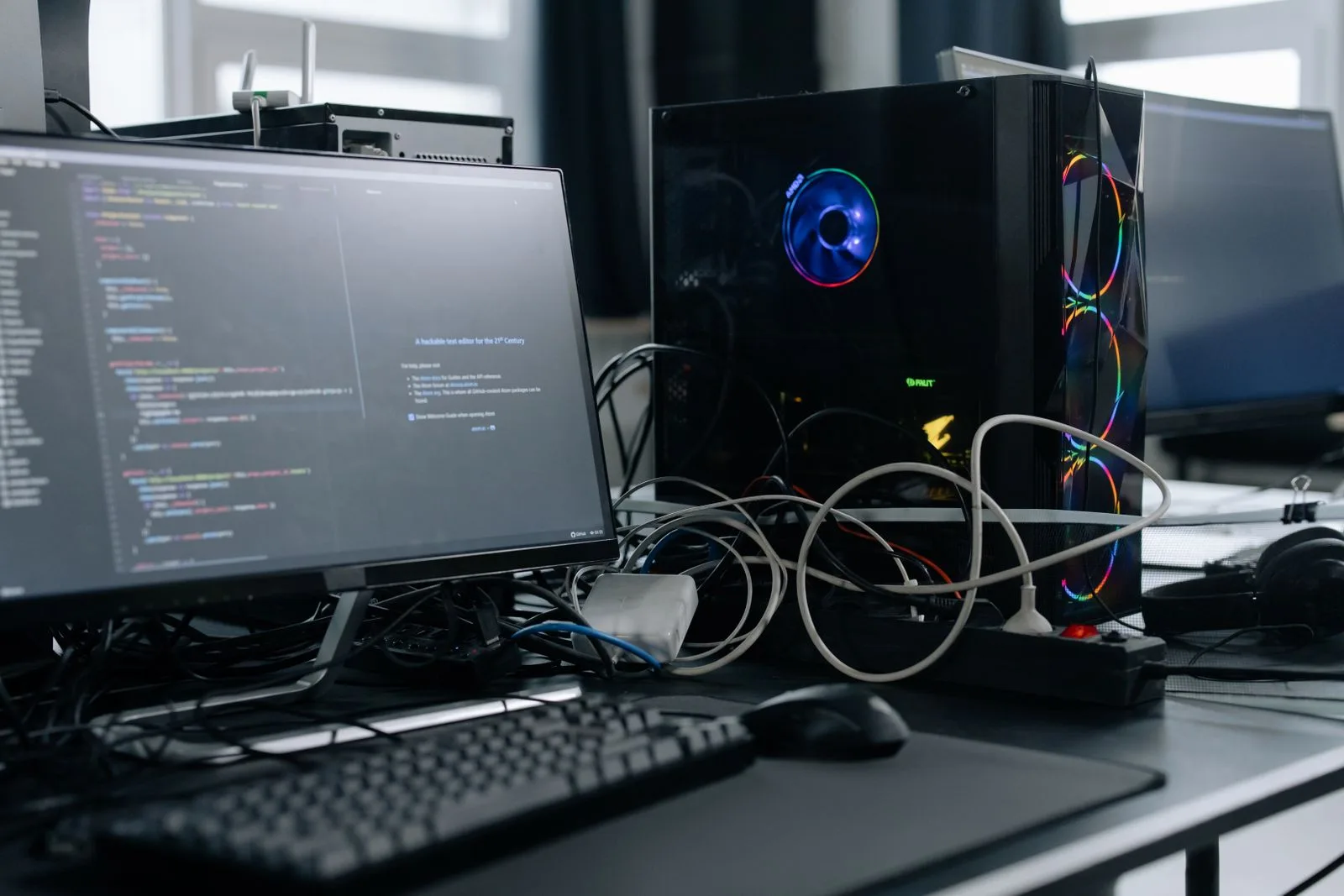
LAN rooms, the venues where people play online on computers and consoles, could get rules of their own for the first time. They are set out in Article 25 of Italy's 2027 budget bill, which introduces an authorisation and a tax calculated on every station. For now it is a text under discussion, not a law.
Where it stands
The text has been checked by the State Accounting Office, signed by the President of the Republic and sent to the Chamber of Deputies. The aim is to approve it by the end of 2026 so it takes effect on January 1, 2027. It can still change during review in Parliament.
What it costs
The two-year authorisation is paid as follows:
| Item | Amount |
|---|---|
| Per device | €200 |
| Per room | €1,000 |
| Per game offered | €2,000 |
| Per online platform | €10,000 |
On top comes the entertainment tax, calculated on a fixed base: 15,000 euros a year for each device or station, 25,000 euros for large simulators. With the 8% rate given in the technical report, that means about 1,200 euros a year per station, and 2,000 euros for the largest simulators. The tax does not depend on the room's takings.
An example shows the weight: a room with 30 stations, three games and one management platform would pay 23,000 euros for the two-year authorisation (6,000 for the devices, 1,000 for the room, 6,000 for the games and 10,000 for the platform). The tax comes on top: 30 stations at about 1,200 euros a year make about 36,000 euros a year.
What changes
The rule amends Article 110 of the consolidated public-safety law and defines LAN rooms as venues dedicated to pure skill and entertainment video games, with no cash prizes, reached through online platforms. Consoles and simulators are included.
- Authorisation: opening a room and installing the devices requires authorisation from the customs and monopolies agency (ADM), valid for two years.
- Minimum size: at least 20 devices or stations, in a dedicated room, with no other gaming machines.
- Minors: they can enter, but only play titles suited to their age under PEGI or an equivalent rating.
- Betting: banned.
- Time: the room must let players perceive the passing of time.
- Data: the online history of computers must be kept for at least five years.
- Game licences: licences suited to venues open to the public are required.
- Tournaments: the ADM's contribution for controls cannot exceed 8% of entry fees.
Rooms already open
They do not have to close right away. Within 60 days of the law taking effect they file a declaration with location, size, public-safety licence, number of devices and stations, and platforms and games offered. They can keep operating by paying the tax, until the sixtieth day after the ADM's implementing measures, which must come within eight months.
The government's estimates
The technical report foresees about 200 rooms in 2027, with 4,000 stations, and about 2,300 at full scale from 2028, one for every municipality above 5,000 inhabitants, with about 46,000 stations. From this comes the estimated tax revenue: about 4.8 million euros in 2027 and 55.2 million in 2028, to which the authorisation fees are added (over a million in 2027 and over ten million a year from 2028). These are forecasts built on assumptions about the number of rooms, and the one-room-per-municipality figure is an assumption of the document, not a fact.
What remains to be clarified
The conditions for issuing, suspending or revoking authorisations, the tournament rules and the technical requirements for platforms, games and rooms will be set in a later ADM measure. The text of the article also refers to an attached tariff for the rate without giving it in figures: the 8% comes from the technical report.