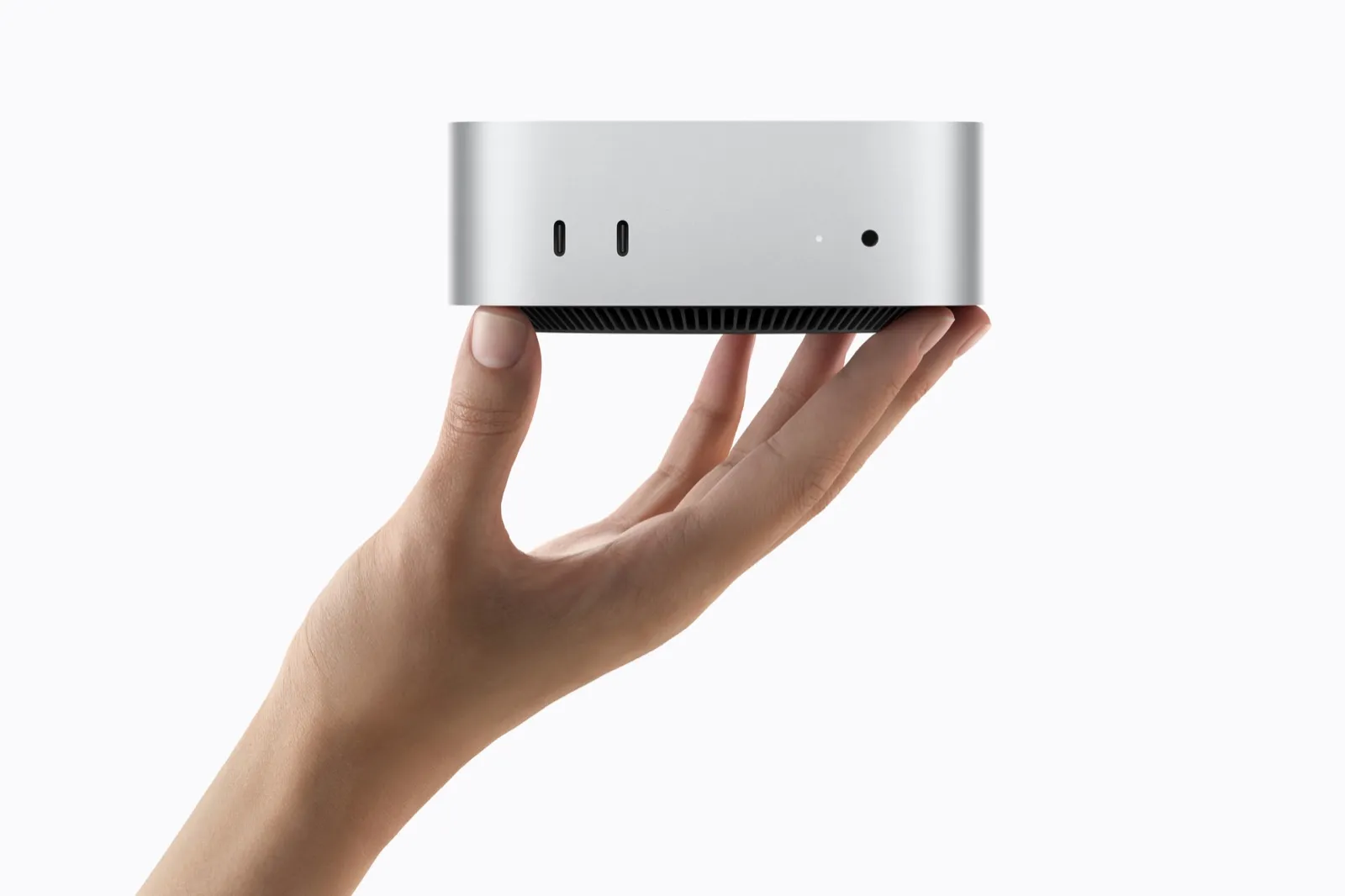
Apple unveils the new Mac mini with M6 and M5 Pro chips
In short: On August 25, 2026, Apple refreshed the Mac mini with two new chips: M6, with a CPU up to 40% faster and AI performance up to 4 times higher than M4, and M5 Pro, built for professional workflows with unified memory up to 64GB. Pricing starts at €1,079, preorders are already open, deliveries begin September 22, 2026.
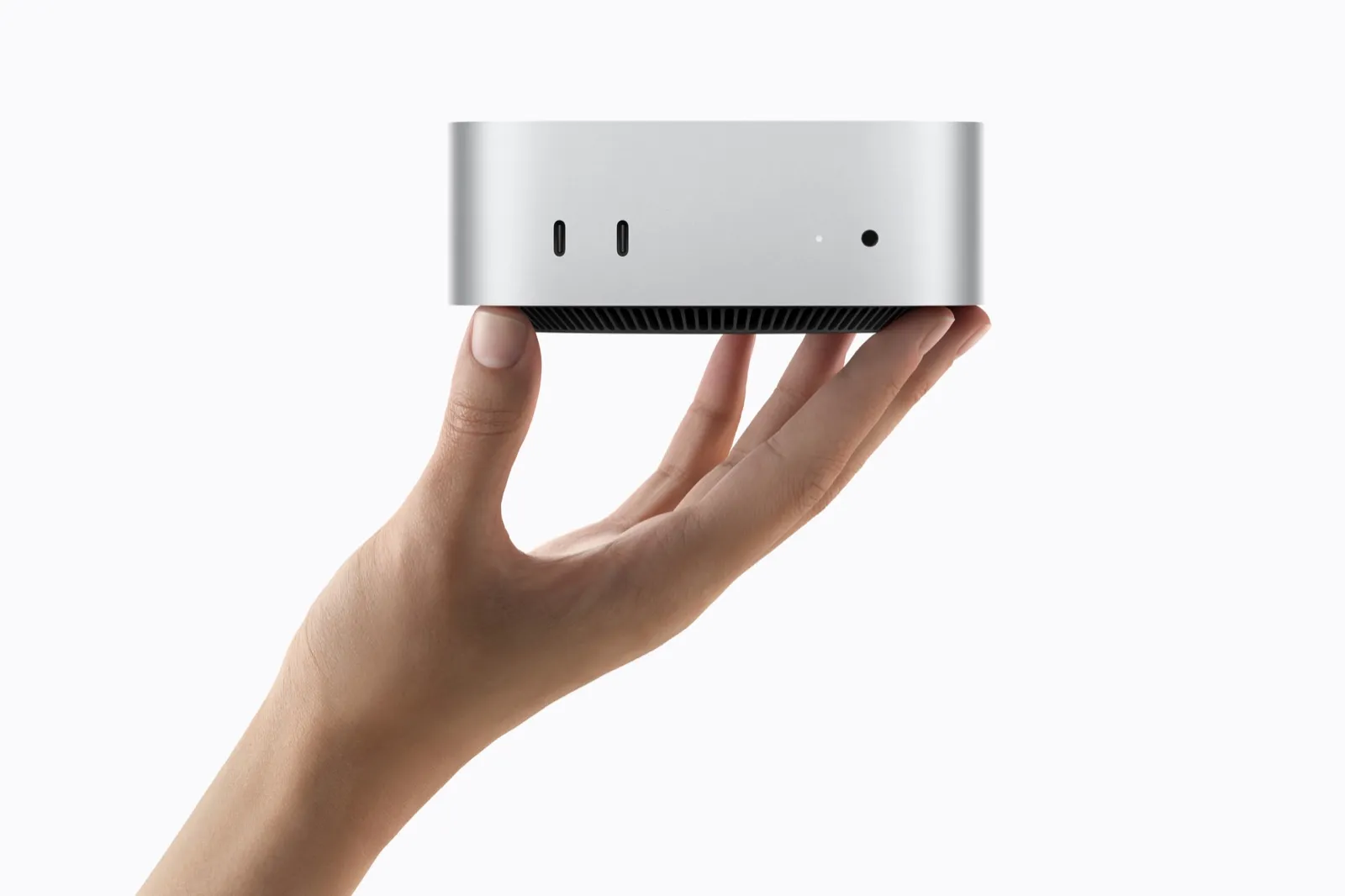 Image: Apple
Apple returns to the Mac mini just months after the turbulence around the M4 model — the removal of the 256GB tier and the higher entry price — with an update that leans entirely into on-device artificial intelligence. Two chips, two audiences: M6 for general use and AI workflows, M5 Pro for those working with video, 3D, and heavy professional loads.
M6 chip specifications
 Image: Apple
The new M6 brings a 12-core CPU, two more than M4, paired with a 12-core GPU featuring a Neural Accelerator built into every single GPU core. The Neural Engine consists of two 16-core units. Unified memory starts at 16GB and is expandable up to 32GB, with bandwidth reaching 170 GB/s.
On performance, Apple states:
- CPU: up to 40% faster than M4
- Graphics: up to 2 times snappier
- AI workloads: up to 4 times faster
- LLM prompts: up to 4.8 times faster than M4
- Gaming ray tracing: up to 2 times faster
M5 Pro chip specifications
 Image: Apple
The M5 Pro model raises the bar further for those needing raw power: a CPU with up to 18 cores and high multi-thread performance, a GPU with up to 20 cores and third-generation ray tracing, and a Neural Accelerator in every GPU core. Unified memory goes up to 64GB, with bandwidth up to 307 GB/s.
Compared to M4 Pro, Apple states LLM prompts up to 4 times faster and Blender ray-tracing renders up to 1.4 times faster.
Professional apps on the new Mac mini
Apple showcased the new Mac mini running some of the most widely used professional software in creative and technical fields:
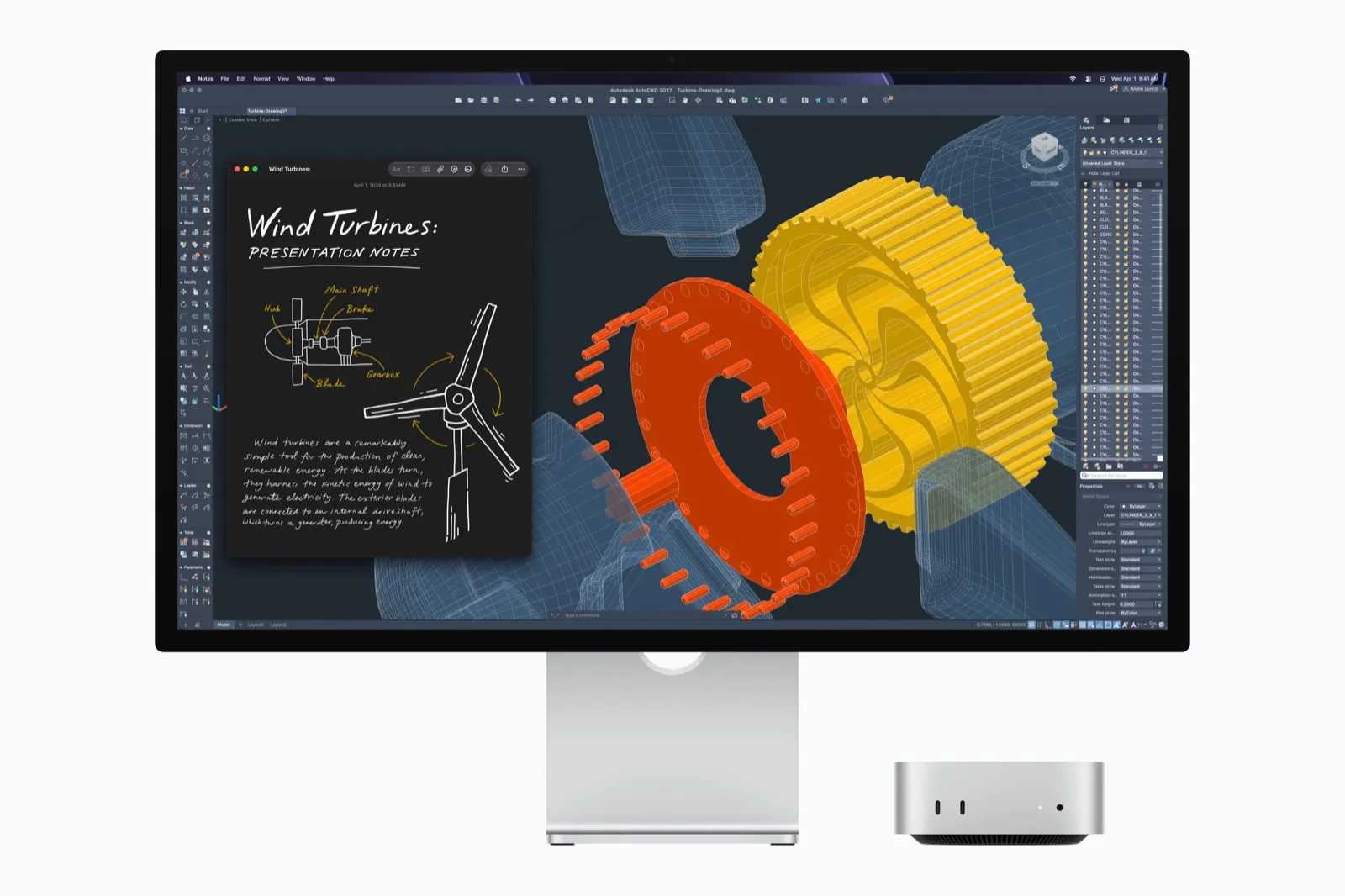 Image: Apple
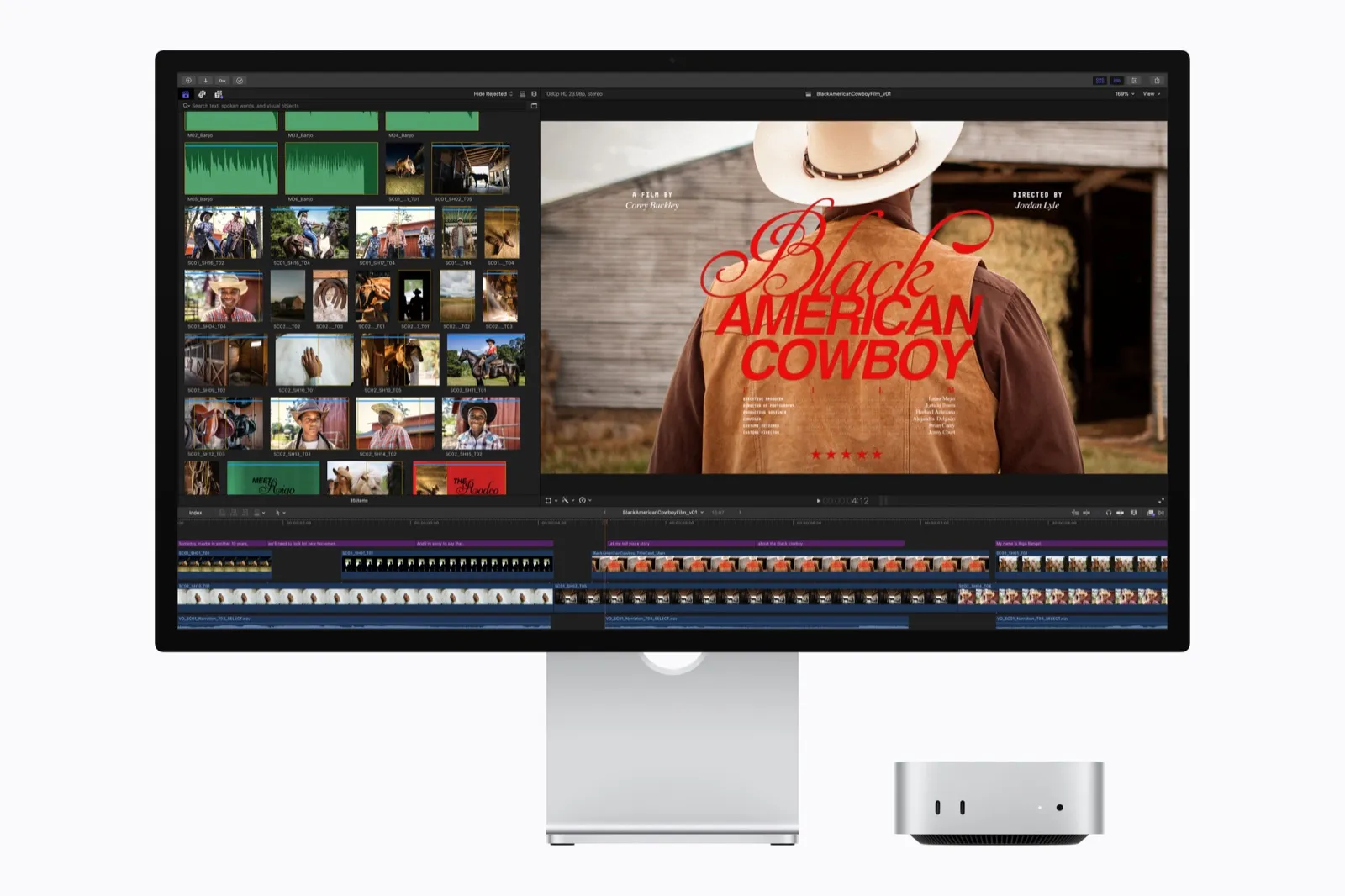 Image: Apple
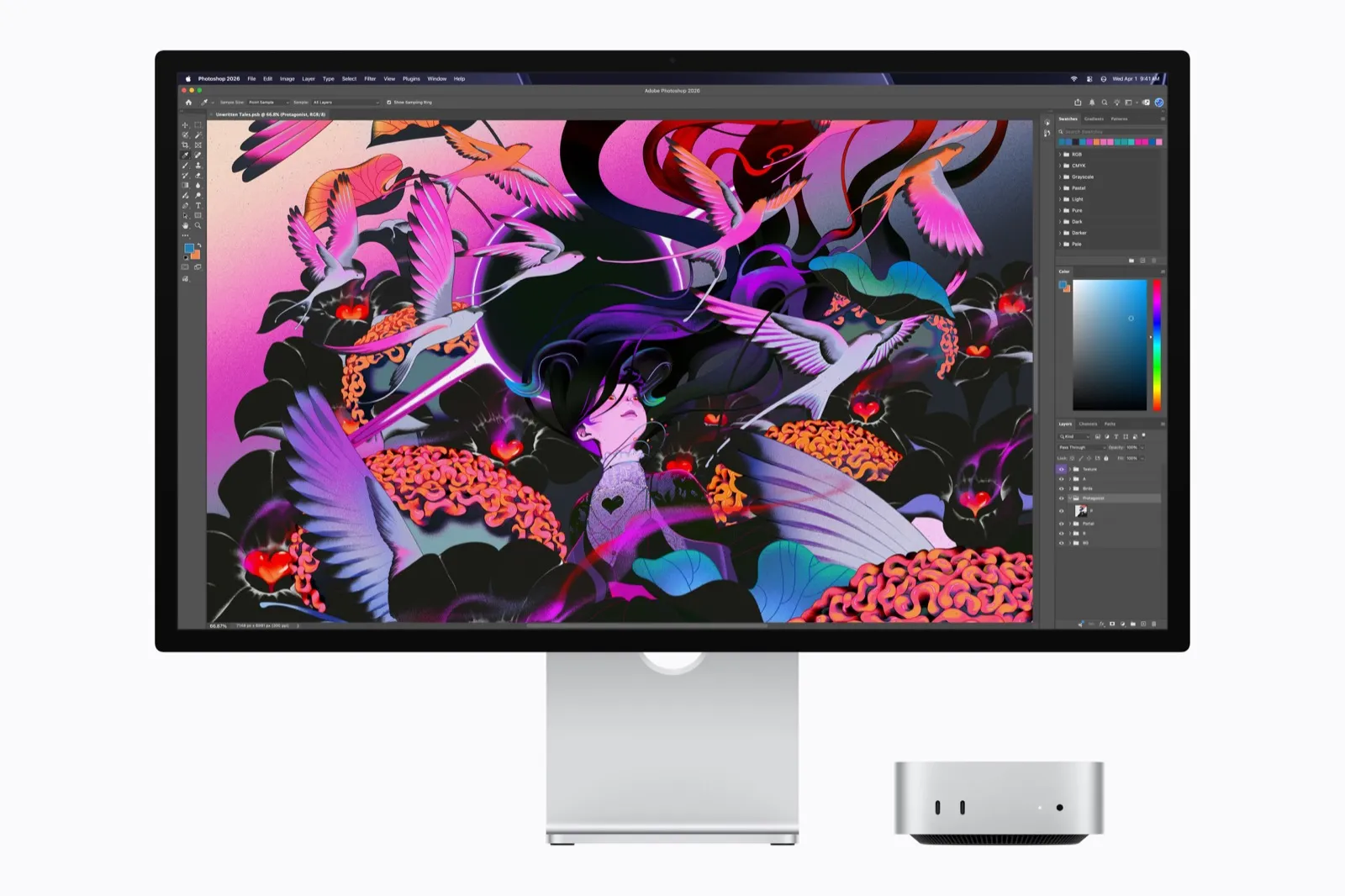 Image: Apple
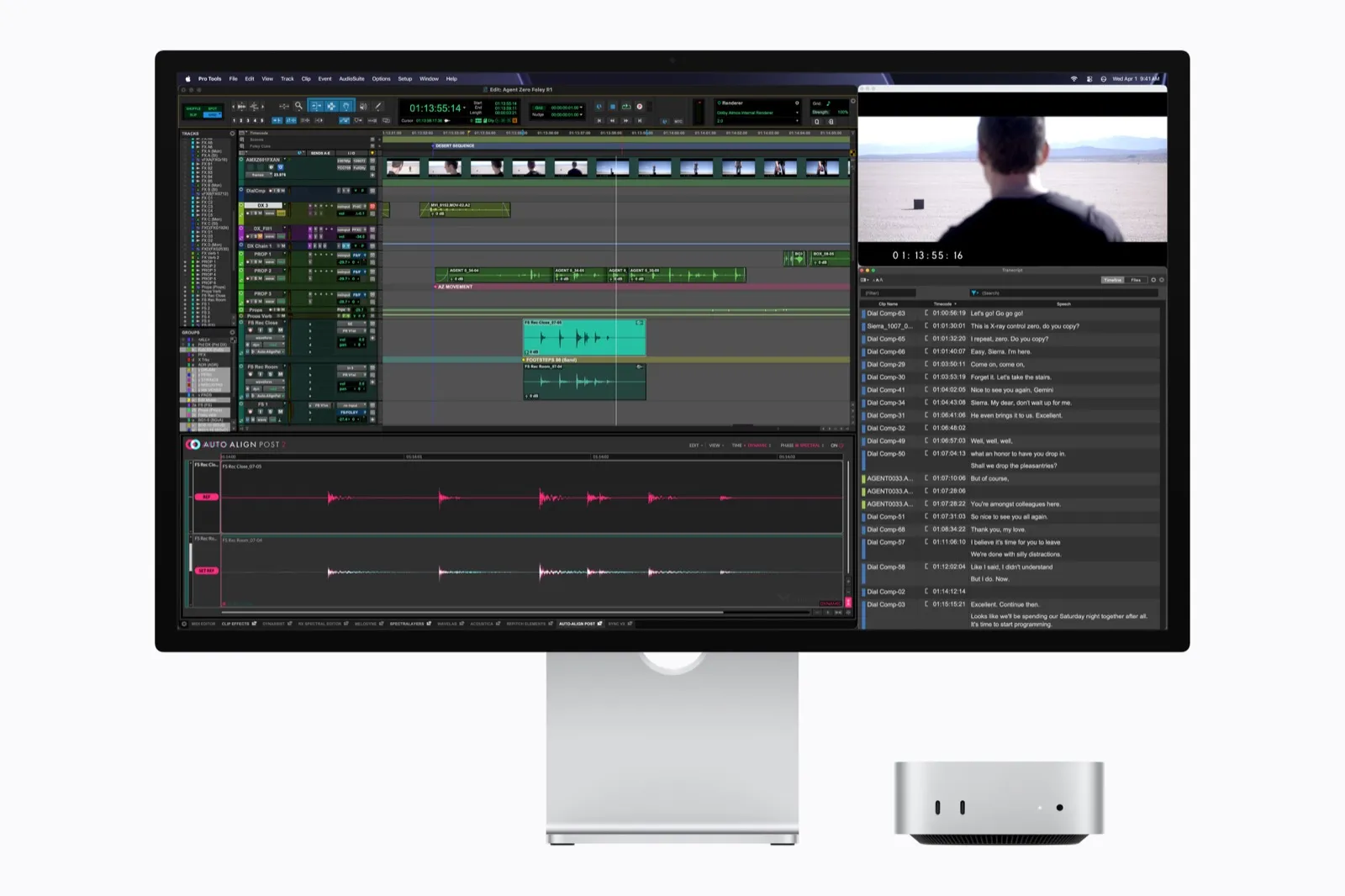 Image: Apple
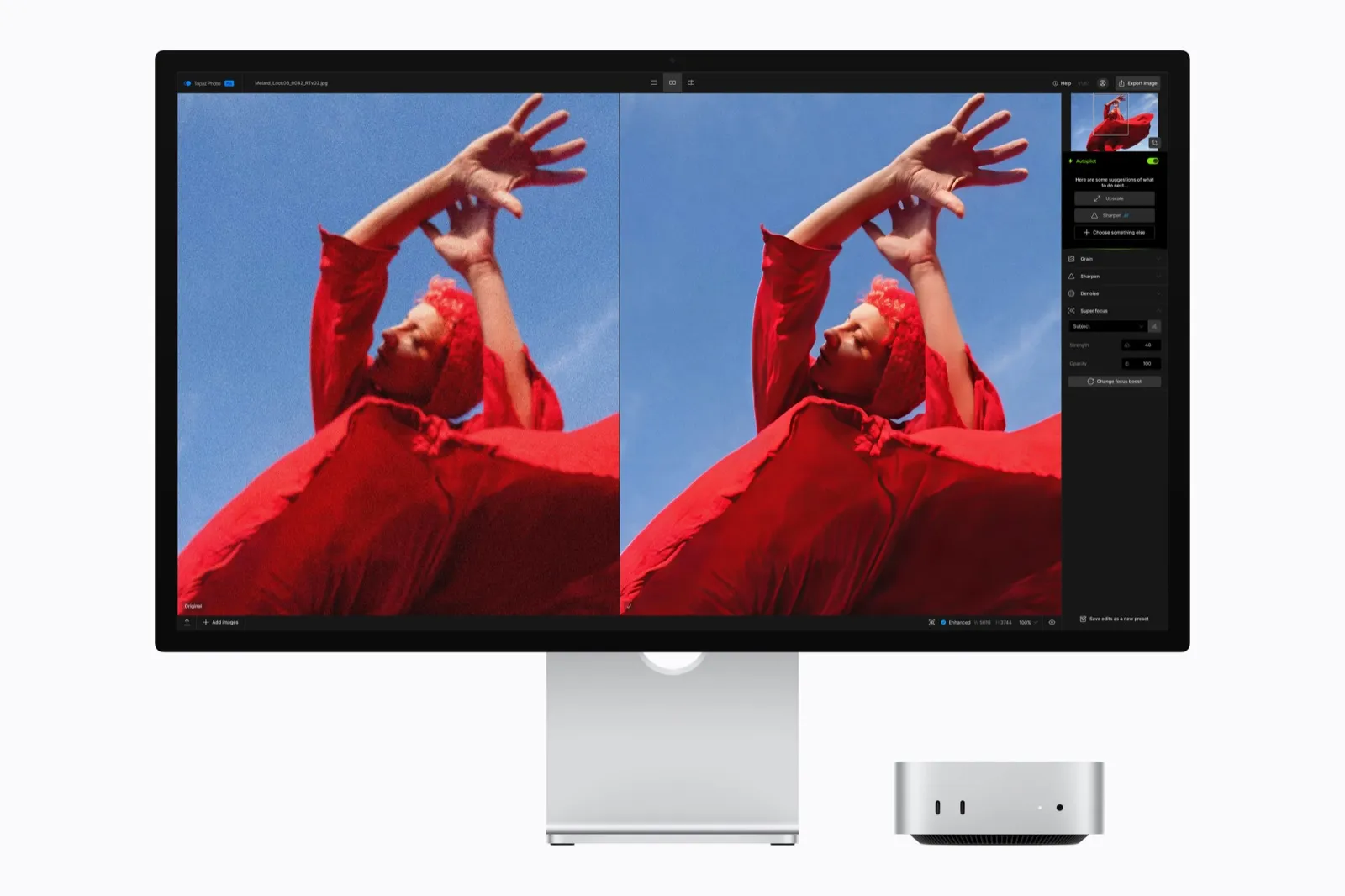 Image: Apple
From technical drafting in AutoCAD to video editing in Final Cut Pro, from photo retouching in Photoshop and Topaz Photo AI to audio production in Pro Tools: the choice of examples confirms that the Mac mini M6/M5 Pro explicitly targets creative professionals, not just general desktop users.
Pricing and availability
| Model | Price | Education price |
|---|---|---|
| Mac mini M6 | €1,079 | €959 |
| Mac mini M5 Pro | €2,029 | €1,909 |
Final price depends on the chosen configuration. The Mac mini M6 is available in two storage tiers in ascending price order: 512GB (16GB RAM) and 1TB (32GB RAM), configurable up to a maximum of 2TB storage and 32GB unified memory. The Mac mini M5 Pro is available in two starting configurations: one with a 15-core CPU, 16-core GPU, 24GB RAM and 512GB storage, and a higher one with an 18-core CPU, 20-core GPU, 64GB RAM and 1TB storage.
Preorders opened on August 25, 2026, the same day as the announcement. Deliveries and in-store availability are expected on September 22, 2026.
Connectivity and design
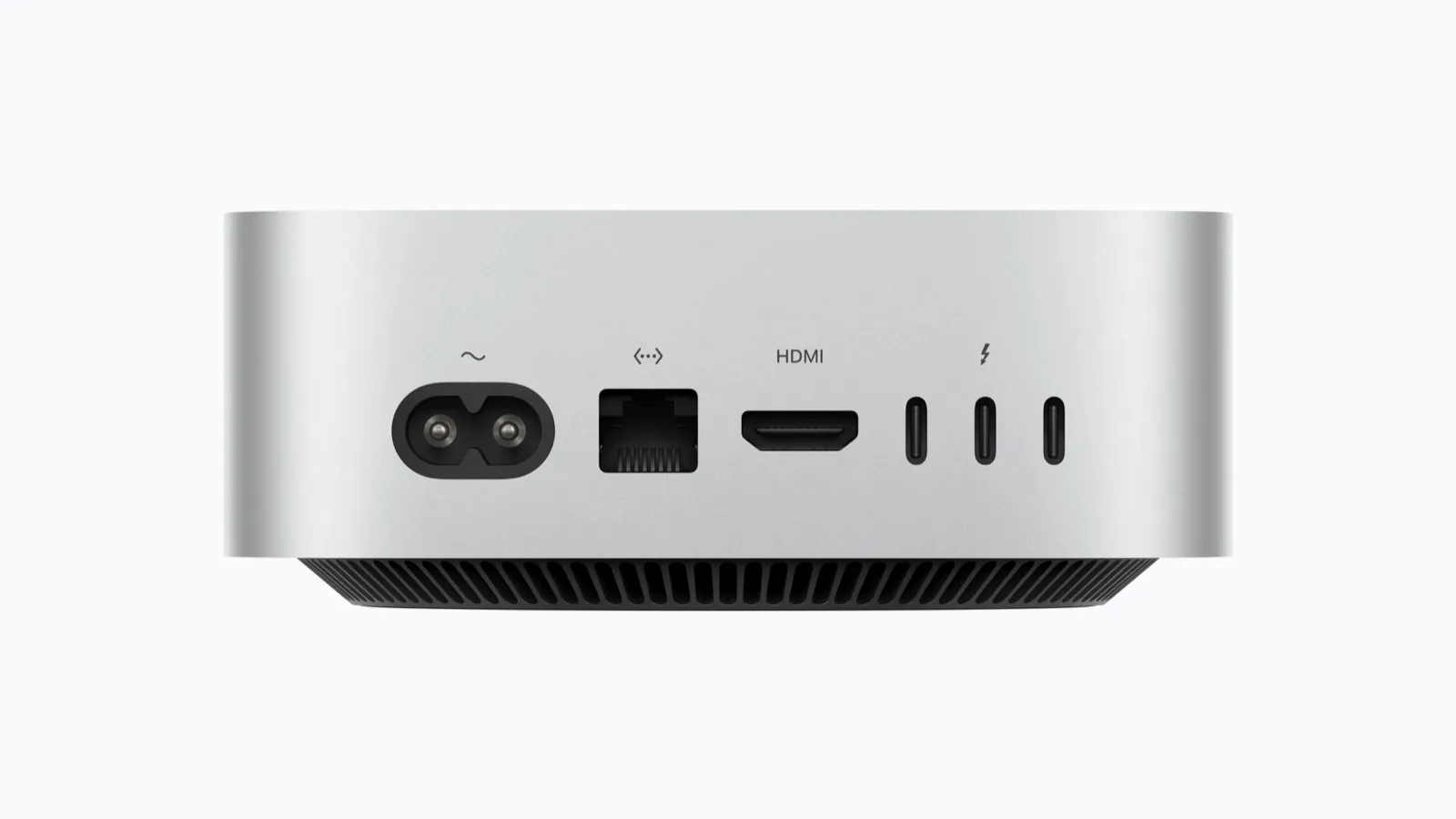 Image: Apple
The compact form factor familiar from the Mac mini line remains unchanged. Port configuration varies by chip:
- M6: three Thunderbolt 4 ports
- M5 Pro: three Thunderbolt 5 ports
Both models share two front USB-C ports with a headphone jack, Wi-Fi 7, Bluetooth 6, and 2.5Gb Ethernet, with a 10Gb option for those working in more demanding network environments.
Both configurations support up to three external displays via the Thunderbolt and HDMI ports. With a single monitor connected, resolution reaches up to 8K at 60Hz, 5K at 120Hz, or 4K at 240Hz. With three displays connected at once, the Mac mini M6 drives two screens at up to 6K at 60Hz (or 4K at 165Hz) plus a third at up to 5K/4K at 60Hz, while the Mac mini M5 Pro pushes all three displays up to 6K at 60Hz or 4K at 165Hz.
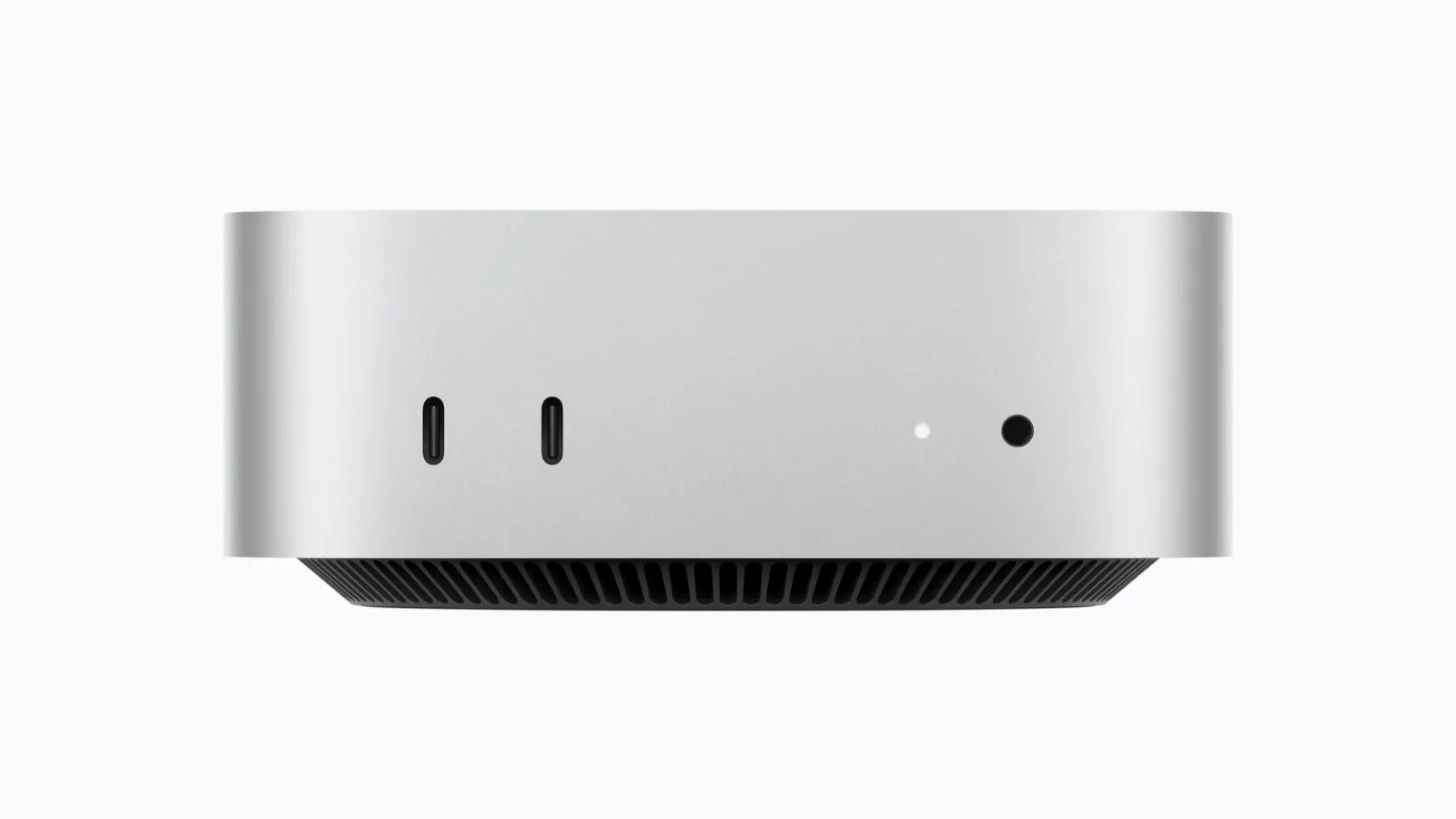 Image: Apple
Software: macOS 27 and Apple Intelligence
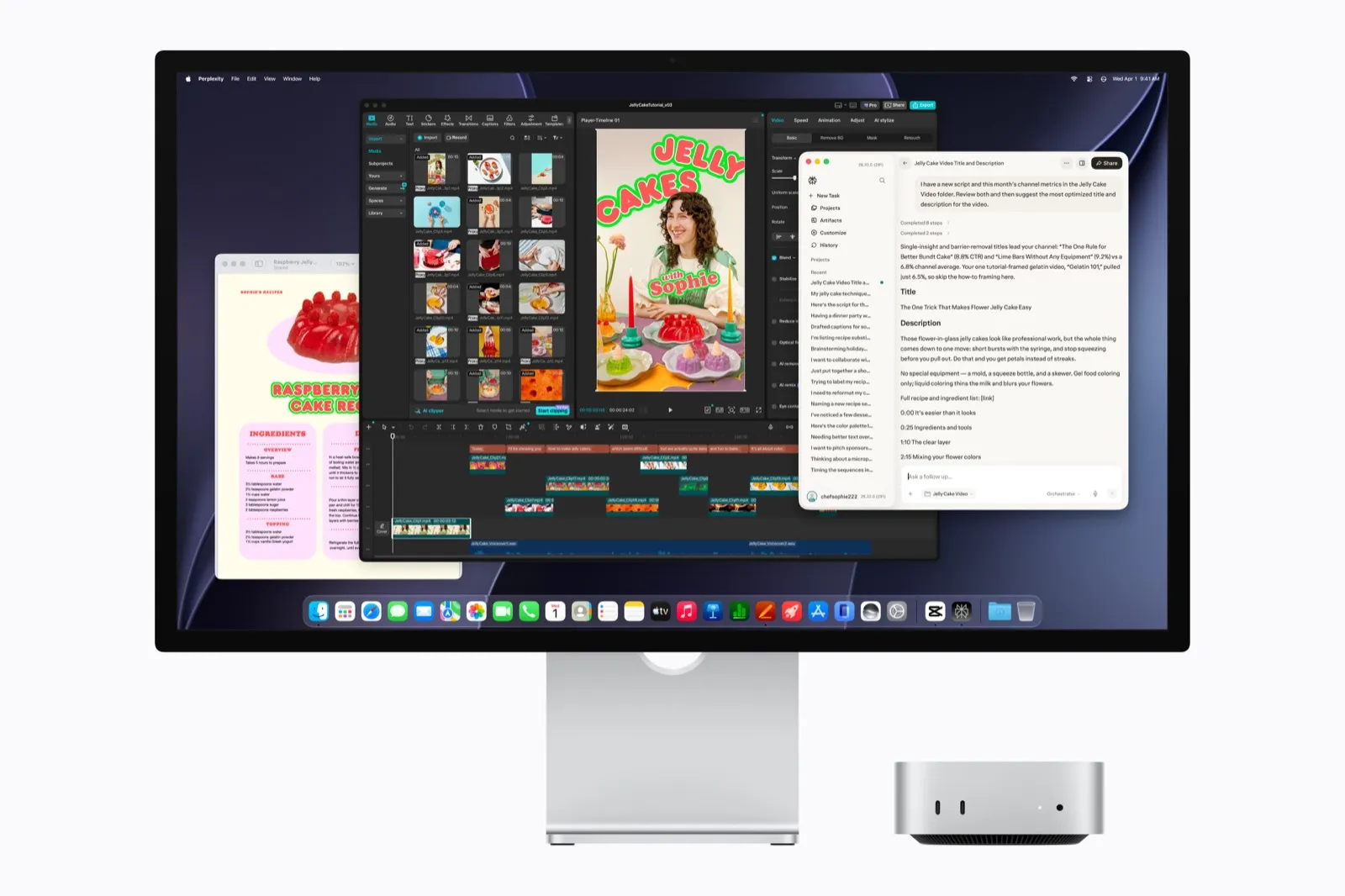 Image: Apple
The new Mac mini ships with macOS 27 and built-in Apple Intelligence features, confirming the machine's positioning as a platform designed from the software up for AI workloads, from local inference to agentic tools.
Why this update matters
 Image: Apple
The context makes the announcement particularly relevant: the Mac mini M4 had already become one of the preferred machines for running local AI models, to the point of pushing Apple to remove the cheapest configuration under demand pressure. With M6 and M5 Pro, Apple isn't just updating general performance — it's doubling down precisely on the front that drove that demand: a more powerful Neural Engine, wider unified memory, LLM prompts up to nearly 5 times faster. This is an update explicitly designed for those using the Mac mini as an AI workstation, not just as a compact desktop computer.
Conclusion
With the Mac mini M6 and M5 Pro, Apple confirms the strategy it's pursued over the past year: turning its most accessible desktop machine into the reference point for on-device AI. The stated numbers — CPU +40%, AI up to 4 times faster, LLM prompts up to 4.8 times higher — point to a real generational leap, not a cosmetic one. It remains to be seen, once independent reviews arrive after September 22, whether Apple's stated performance holds up against real-world benchmarks.